HOW TO COMBINE AND STYLE COLORS THE RIGHT WAY - A PRACTICAL MENSWEAR GUIDE
Color coordination in menswear is one of those topics that never goes out of style. And yet, it’s exactly where many men still feel uncertain. This guide breaks down color coordination in menswear in a clear, practical way. No fashion-school theory, no unnecessary rules. Just a system you can actually use.
Everyone has strengths when it comes to dressing. Some instinctively understand color, others don’t. And that’s perfectly fine. The important thing to understand: Combining colors is not a talent, it’s a skill. And like any skill, it follows a few fundamental rules.

Step 1: Choose colors that work for you
Before thinking about combinations, you need the right base colors. Not trends. Not what looks good on someone else. Colors that work on you and feel natural. A reliable starting point in menswear are colors that work year-round and across occasions: blue, brown, beige (neutrals) and olive green. These are the backbone of a modern men’s wardrobe. They’re versatile, timeless and easy to combine. Supporting them are the so-called “non-colors”: black, grey and white. These act as neutral anchors and help calm stronger combinations. The key takeaway: if you build your wardrobe around these tones, you already eliminate most styling mistakes before they happen.
Step 2: Understanding the color wheel (the modern way)
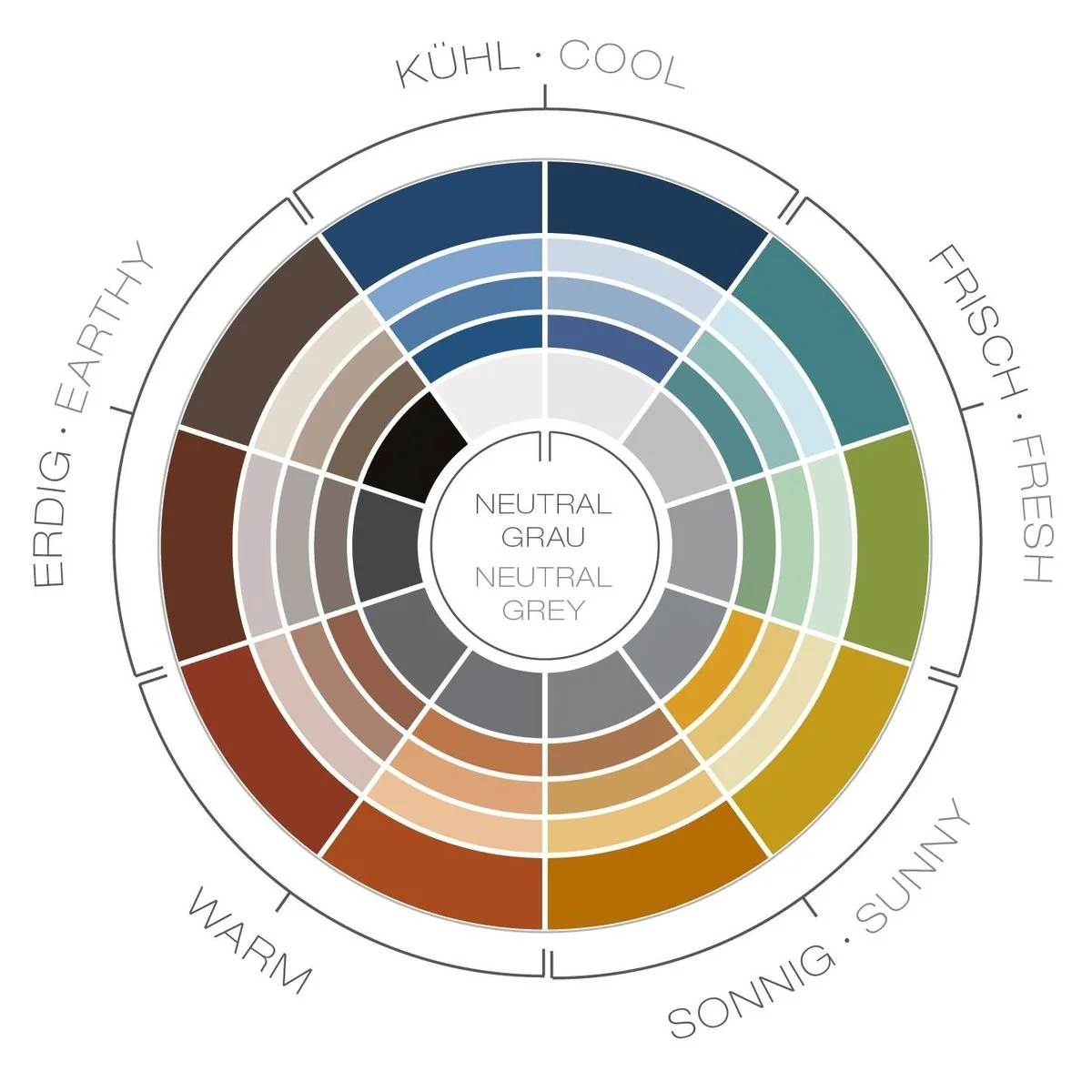
The classic color wheel you learned in school is useful - but limited. A modern menswear color wheel focuses less on primary colors and more on tonal families: warm, earthy, cool and sunny tones. Within those families, you’ll find countless shades that work naturally together. Neon colors and overly synthetic tones are intentionally left out. They’re niche, trend-driven and rarely versatile in real life. Once you identify the tonal family you feel comfortable with, styling becomes significantly easier.

Step 3: The Golden Rule - Three colors per outfit
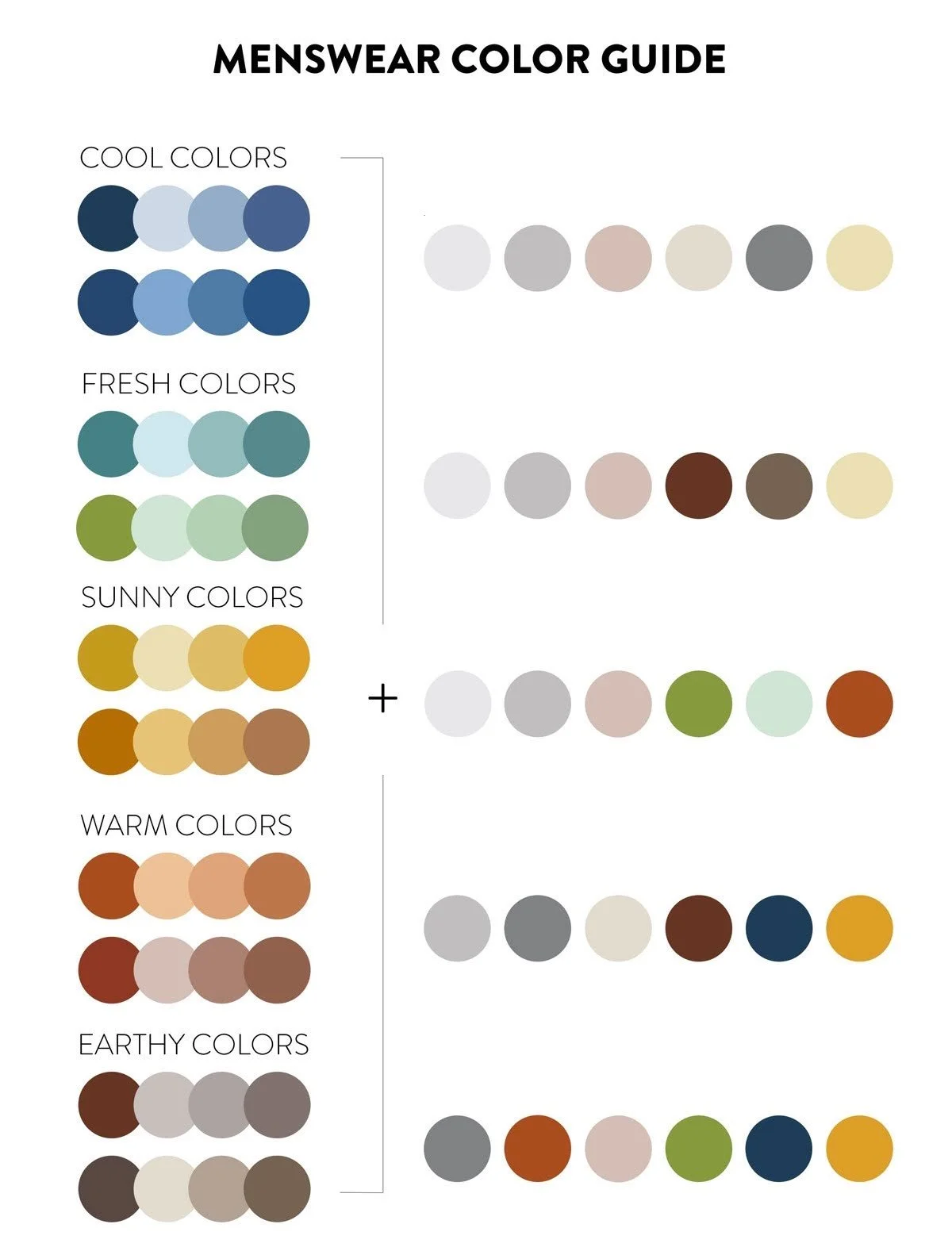
A modern, well-balanced outfit usually consists of three colors - no more, no less. I recommend selecting these three colors from two different tonal families (Example: Two warm colors and one sunny color). This creates contrast without chaos. The combinations are almost endless, but the structure keeps everything wearable. Advanced dressers can add a fourth color—but only if it’s clearly derived from one of the existing tones. Think of it as a variation, not a new statement.
The Exception: Black & White outfits. They work with just two colors and can look incredibly strong—especially in more avant-garde or minimalist styling. However for everyday outfits two colors often feel flat and uninspired
Step 4: Monochrome Looks: Why they’re so easy to wear
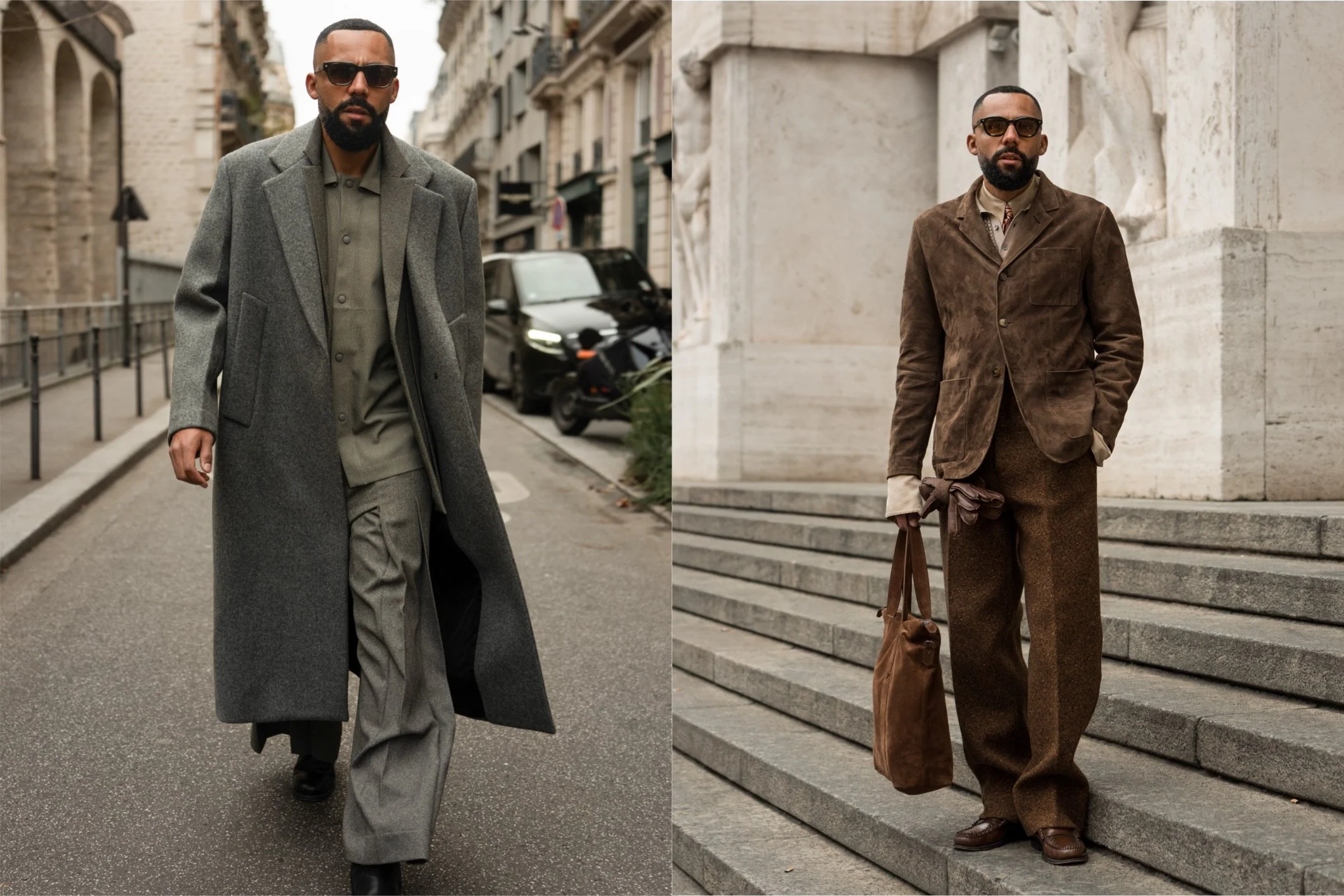
Monochrome outfits remain popular for a reason. When you stay within one color family by using three or four different shades (Example: 3 cool colors) - you gain enormous freedom. Earthy tones, warm tones, sunny tones or fresh tones can be mixed generously without overthinking. Because the colors are closely related, harmony is built in. That’s why monochrome dressing feels effortless: the system does the work for you.
Step 5: Mixing different color families? Follow this rule
Once you move away from monochrome looks and start mixing color families, structure becomes essential. The most reliable rule here is simple:
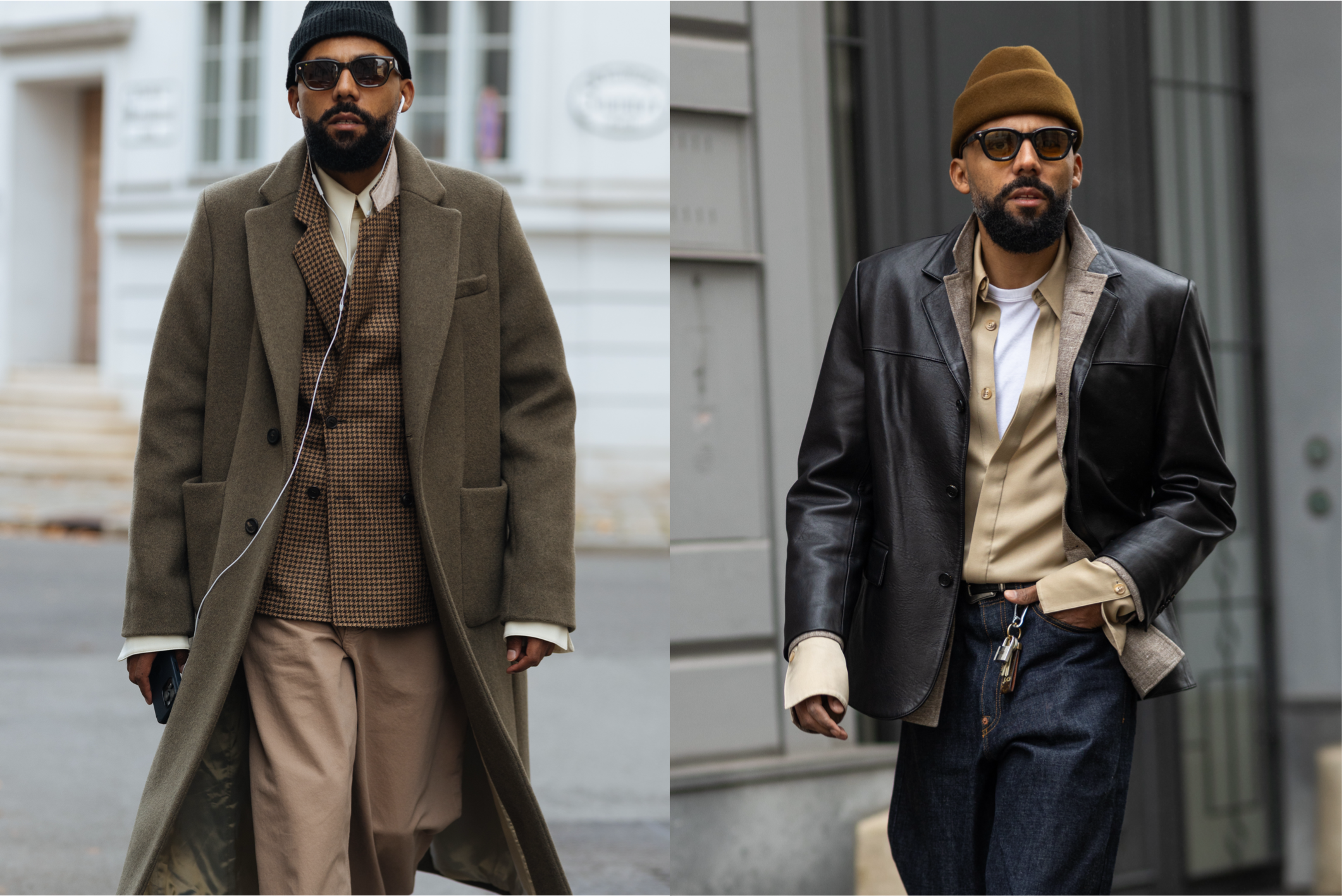
Dress from light to dark - inside to outside: Inner layers (T-shirt, shirt) should be lighter while outer layers (knitwear, jackets, coats) should be darker. For casual and experimental outfits, this rule can be bent. For elegant looks, especially tailoring, it becomes crucial. With suits, trousers should be in the same tone or slightly lighter than the jacket to keep proportions balanced. Only exception: Black trousers - They always work.
Step 6: Shoes: Where most outfits fail
Shoes are often blamed unfairly. The problem is rarely the shoe itself - it’s the lack of contrast. Key rules: Never match shoes exactly to the color of your trousers (Exception: black trousers with black shoes). Shoes should add contrast, not disappear. In simple outfits, shoes should often act as the third color. So if your outfit only has two colors, your shoes must introduce the third. Matching shoes to the top alone usually isn’t enough. Can’t change your shoes? Add a layer: an overshirt, a coat, a knit. Structure always beats replacement.

Step 7: Black, white & grey: use Them Wisely
White shirts always work. When in doubt, choose white. Black tops need balance though. Avoid pairing them with extremely light trousers - the contrast is often too harsh. Grey is the secret weapon. It works with almost every color and smooths transitions effortlessly.