HOW TO BUILD AN OUTFIT IN 5 STEPS
A practical menswear guide for creating balanced, individual looks
There’s no universal formula for how to build the perfect outfit. Style isn’t math - it’s context, intuition and personal taste. That said, there is a clear structure that makes getting dressed easier, faster and far more intentional. This is my personal approach: five steps that work across occasions, aesthetics and wardrobes.
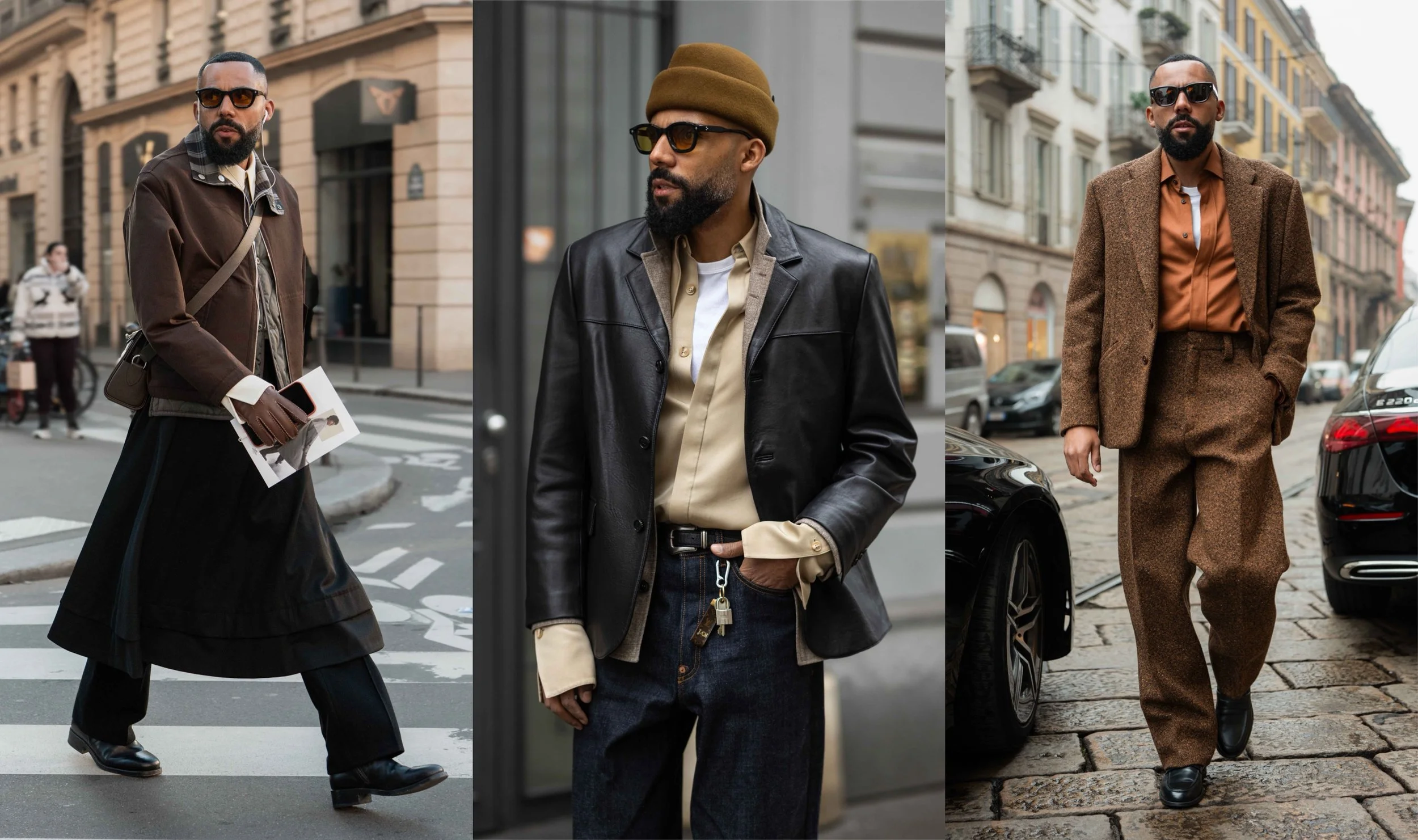
1. Fit in - while standing out
It sounds contradictory, but this is where good style begins. You adapt to the occasion without disappearing into it. At a wedding, that still means wearing a suit but instead of defaulting to the same single-breasted silhouette everyone else is wearing, you might choose a double-breasted blazer or a broken suit. In business settings, if the room is full of classic shirts, a long pointed collar can introduce just enough nuance to set you apart. The goal isn’t provocation. It’s relevance with personality.
2. Start with one key item
Every strong outfit has an anchor. A jacket, a pair of trousers, a knit - whatever you want to wear that day becomes the starting point. Once that decision is made, everything else falls into place more easily. If the key item is visually loud or dominant, the rest of the outfit needs restraint. Take a cropped bomber jacket as an example: strong shape, lots of presence. That immediately calls for quiet companions - a clean white T-shirt that doesn’t compete, tucked in to emphasize proportions, and regular-fit denim. Wide trousers wouldn’t work here because the bomber already adds volume. Balance and proportion always win.
3. Control your color palette
A reliable rule: use at least three and no more than four color shades in one outfit. This works for both monochromatic looks and mixed palettes. The main exceptions are all-black or strict black-and-white outfits, where contrast replaces color variety. Limiting your palette creates cohesion. Too few colors can feel flat, too many feel chaotic. Staying within this range keeps the look intentional - not accidental.
4. Know your body and think in opposites
Understanding your proportions is non-negotiable. Style only really works when it works on you. Think in contrasts: Slim legs benefit from wider trousers; a shorter frame gains length from tucked-in tops; a muscular build looks cleaner in thinner fabrics that avoid unnecessary bulk. The aim isn’t to hide your body, but to balance it visually.
5. Add the finishing touches
Details are what people remember. Accessories and subtle styling choices are often the difference between a good outfit and a great one. Key chains, watches, bags or beanies can shift the entire mood. So can smaller gestures: a popped or double collar, a special belt knot, a waist belt, a half-zipped jacket or a knit casually thrown over the shoulders. None of these should scream for attention - they simply reward a second look.
Final thought
Building an outfit isn’t about rules for the sake of rules. It’s about structure that leaves room for expression. Master these five steps, and getting dressed becomes less about guessing and more about intention.